Chengdu · animal encounters

The panda base matters. So does the hour you arrive.

Chengdu has more than one way to see a giant panda. The right choice depends on how much road time your group can enjoy, whether you want a quiet morning or a close research-base look, and what you want to do after lunch.

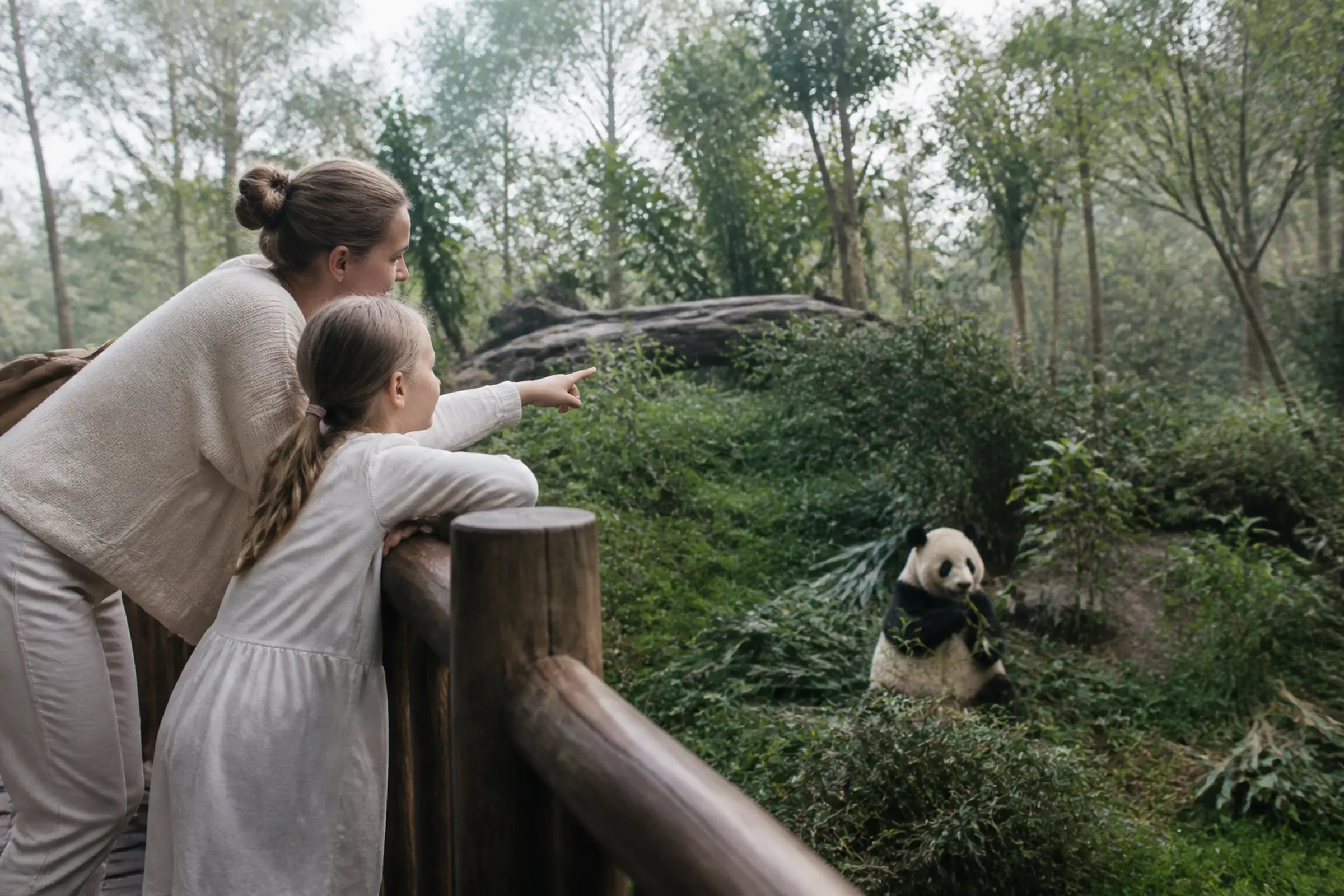
A family watching giant pandas at a Chengdu panda baseConcept visual
  • 4 basesFour useful choices around Chengdu
  • 7:30–11:00The most reliable morning activity window
  • 2.5–3.5 hoursA comfortable visit at the nearest bases
  • 4–6 kmTypical walking inside a base

The short answer

Choose the base before you choose the rest of the day.

The nearest base is not always the best base. The experience changes with every extra kilometre.

Pandas sleep a lot—often 12 to 16 hours a day—so the first question is not “which base has the most pandas?” It is “which base can we reach early enough to see a useful morning?” The second question is what your group wants after the visit: a city afternoon, a research-base day or a mountain route.

For most first-time visitors, a base visit takes 2.5 to 3.5 hours and includes 4 to 6 km of walking on shaded paths. Bring patience for queues and a plan for the return; the memorable part is watching the animals behave, not ticking every enclosure.

Four useful choices

Here is what each base is really for.

  • Chengdu Research Base of Giant Panda BreedingChenghua · about 30 minutes from central Chengdu

    This is the straightforward public nursery visit and the easiest base to fit into a city stay. It is the busiest choice, especially on holidays and weekends, but the access is hard to beat. Come at opening, keep expectations realistic about nursery access, and leave time for the red pandas and adult enclosures.

  • Dujiangyan Panda BaseAbout 1.5 hours · our usual first-timer recommendation

    Dujiangyan creates a calmer day for visitors who can give the morning to the road. The paths feel less compressed than Chenghua and the visit pairs naturally with a slower afternoon in Dujiangyan or Qingcheng Mountain. It is a good balance of access, space and time.

  • Bifengxia Panda BaseAbout 2.5 hours · a full-day commitment

    Bifengxia suits travellers who want a research-base setting or are interested in the keeper-for-a-day programme. It is too far to treat as a quick add-on from Chengdu. Build the transfer into the day and confirm programme availability before promising it to children.

  • Wolong Panda CentreAbout 4 hours · plan at least two days

    Wolong belongs in a mountain or conservation-focused route rather than a city day. The research context is compelling, but the distance means an overnight and a slower itinerary. It works well when the group already wants to explore western Sichuan.

The morning window

Arrive before the day gets loud.

Summer mornings usually reward a 7:30–10:00 start; in winter, activity often runs later, roughly 9:00–11:30. Spring and autumn sit between those patterns.

These are useful planning rhythms, not a promise from an individual animal. Weather, feeding and the base's daily arrangements change. The reliable choice is to arrive at opening, walk slowly and let the morning unfold. By late morning, visitors are more numerous and many pandas settle down.

Do not turn a panda visit into a race between photo points. A child who gets to sit on a quiet bench and watch one animal work through a bamboo stalk usually remembers more than the group that hurries through every exhibit.

What you will see

Think habitats and behaviour, not a guaranteed close-up.

  • Adult panda enclosures. The core visit is watching animals eat, climb, nap and negotiate their space. Keep voices low and follow the path.
  • Nursery areas. Chenghua is the public base most associated with the nursery, but access and visibility vary. A nursery visit is never a promise that a cub will be awake or on view.
  • Red panda areas. These smaller, quick animals are easy to miss when everyone is looking for black and white. Leave room in the pace for them.
  • Research context. Bifengxia and Wolong can add a stronger conservation and breeding perspective, especially when the rest of the route already reaches those areas.

A responsible visit follows the base's rules: no feeding, flash, shouting, tripods or selfie sticks where prohibited. The best image is the one that does not change the animal's morning.

Keeper for a day

Bifengxia is a working experience, not a photo package.

The programme is built around conservation tasks and staff instruction. It takes a full day and needs a separate confirmation.

A typical Bifengxia rhythm Full day

  • 08:30 — Sign in and receive the day's briefing.
  • Morning — Prepare bamboo, clean and observe with staff.
  • Midday — Lunch and a short rest.
  • Afternoon — Continue practical work and keeper-led observation.
  • Around 16:00 — Finish the programme and return.

Allow roughly 2.5 hours each way from Chengdu, more in traffic. Materials and instructions are often in Mandarin, so ask what language support is available for your date.

Who should choose it? A clear yes or no

Choose it when your group is happy to work, wait and listen. Skip it when the brief is “see a panda quickly before lunch.” The public base visit is the kinder fit for a short city stay, younger children or anyone who does not want a long road day.

One calm Chengdu day

Our default shape for a first visit.

07:30 — Meet a private guide and driver, then travel to the base. 08:30–11:00 — Follow the morning loop while the pandas are active. 11:30 — Return towards the city. 12:30 — Lunch near Jinli or Kuanzhai Alley. 14:00–17:00 — Choose one: Sichuan Museum, People's Park and a teahouse, or a slower neighbourhood walk. 18:30 — Hotpot if everyone still has room.

The shape stays intentionally light. If the base is Chenghua, add a museum or a food stop. If it is Dujiangyan, let Dujiangyan and Qingcheng Mountain become the afternoon instead of forcing a city loop. A guide, driver, entry arrangement and reservations keep the day moving while leaving decisions open.

Pack lightly

Wear shoes you can walk in, bring sun protection, carry a small amount of cash because card acceptance can vary, and use a camera with a zoom lens if you have one. Leave food, a tripod and a selfie stick at the hotel.

Choose by the group

The right base changes with the people travelling.

  • With young childrenShort transfer, early finish

    Choose Chenghua or Dujiangyan and protect the morning. A tired child does better with one good base and an unhurried lunch than with a distant programme added for prestige.

  • With grandparentsWalking and shade matter

    Ask about route length, rest points and vehicle access before booking. Dujiangyan can feel calmer, but the right answer depends on mobility and the season. Keep the afternoon close to the hotel.

  • With a serious wildlife travellerResearch context

    Bifengxia or Wolong may reward the extra road time. Build an overnight, confirm access and let the conservation story carry more weight than a checklist of photographs.

The honest answer

One good morning beats four rushed bases.

Chenghua is the easiest public visit. Dujiangyan is the best balance for many first-time travellers. Bifengxia is a full-day conservation experience. Wolong needs a mountain itinerary. That is enough information to make the first decision.

Send us the ages, walking comfort, travel dates and the other places on your list. We will match the base to the day around it, then check the current opening and reservation position before you commit.

Operated by Chengdu Everbright International Travel Service Co., Ltd. — licensed since 1987Travel licence L-SC-CJ00008See the paperwork →

Read next

Build the rest of Sichuan around the morning.

Good to know

Questions we hear often.

Which panda base is best for a first visit?

Chenghua is the easiest public nursery visit in Chengdu, but it is also the busiest. Dujiangyan is our usual first-time recommendation when the group wants more breathing room and can spare the transfer. Bifengxia and Wolong make sense when the wider itinerary already reaches those valleys.

What time should I arrive at the panda base?

Arrive at opening, ideally around 7:30. Pandas tend to be more active while they eat and move through the morning, and the paths become busier later. Exact opening arrangements can change, so check the base notice before the visit.

Is the keeper-for-a-day programme worth it?

At Bifengxia it is a conservation experience built around bamboo, cleaning, observation and keeper instruction. It is a full-day commitment with a long transfer from Chengdu and should not be treated as a guaranteed photo opportunity. Availability and programme details need to be confirmed for your date.

Can I visit a panda base and see Chengdu in one day?

Yes, if the base is Chenghua or Dujiangyan and the group starts early. Allow a real morning for the pandas, return for lunch, then choose one relaxed city area or museum. Trying to add several attractions after a distant base usually makes the day feel like a transfer schedule.

Your brief

Tell us who is travelling with you.

Share ages, walking comfort and the places already on your list. We will suggest the base and the pace before we fill the day.

No payment, no obligation at this stage. Your details stay between us — see our privacy note.

Start the conversation

See the pandas early.
Keep the rest of the day human.

No pitch, no pressure — just a considered first reply from someone who plans China for a living.

Replies in English · Usually within a few hours, always within 24